
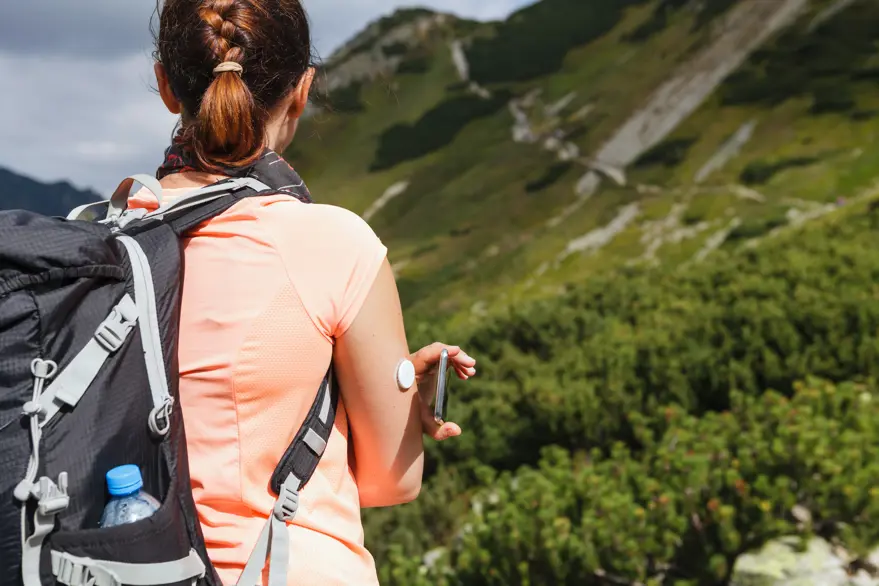

Most active people with type 1 diabetes (T1D) have experienced the discomfort of a rapid blood sugar drop during or after exercise. To minimise this risk, many make it a habit to consume extra carbs before a workout. They see the inevitable blood sugar spike as a necessary trade-off to avoid going low.
Whatever they do, staying within the glycaemic safety zone is a constant concern. For a large group of people living with T1D, the fear of hypoglycaemia deters them from taking exercise at all. That, in turn, increases the risk of cardiovascular disease, reduced quality of life and early mortality1.
So there’s a lot to be gained from taking the anxiety out of exercise by enabling better blood sugar control. A study published in June 2026 investigated the potential to do that using the natural milk sugar lactose and, one of its two monosaccharide components, galactose – the other being glucose, which is the carbohydrate source often used to manage blood sugar2.
Fuel for endurance – and T1D?
Inspiration for the study came from previous research conducted at the University of Birmingham in the UK to investigate the role of lactose as a fuel source for endurance athletes. The findings point to lactose as a viable fuel source for healthy individuals during exercise3. In addition to supporting blood sugar levels, lactose was seen to allow greater fat utilisation compared with sucrose, the common table sugar. Sucrose is composed of glucose and fructose, which are both monosaccharides that are combined in modern sports carbohydrate blends4.
The galactose component of lactose is of particular interest in a diabetes nutrition context. Unlike glucose, which causes a rapid rise in blood sugar, galactose causes only minor blood sugar fluctuations when resting5. Could galactose, then, be a way to improve blood sugar stability in people with diabetes?
A new study takes shape
In the nutrition science team here at Arla Foods Ingredients, we started to discuss this question. Our initial discovery was that, in fact, very little research had been conducted on how the human body takes up and utilises galactose. After contacting Steno Diabetes Centre Aarhus, the idea for a new project took shape in collaboration with the University of Birmingham in the UK and Massey University in New Zealand and with funding from the Novo Nordisk Foundation. Of the three studies included in the project, one investigated the effect of pre-exercise lactose and galactose intake in adults with T1D. Arla Foods Ingredients provided all the carbohydrate test products for the trial, along with a small financial contribution.
It’s the findings from this study that have now been published in a peer-reviewed journal.
Longer in the safe zone
The Clinic for Athletes with Type 1 Diabetes at Steno Diabetes Centre Aarhus recruited 14 physically active individuals with T1D for the double-blind, randomised crossover trial. Over four study days, the participants consumed one of four beverages – containing dextrose (glucose), lactose, galactose or a placebo (non-caloric sweetener) – half an hour before a 60-minute session on an exercise bike.
The results show that pre-exercise intake of lactose and galactose has a lower initial impact on blood sugar than dextrose, reducing the risk of a hyperglycaemic spike. Compared with the placebo, it appears that the milk sugars may help reduce the risk of a hypo. Simply put, the participants’ blood sugars were well balanced between hyper- and hypoglycaemia with lactose and galactose.
These findings support our hypothesis that consumption of milk sugars prior to exercise may be beneficial for people with T1D. To our knowledge, it’s the first study to compare the effect of milk sugars in this way – and it brings a novel perspective to the existing T1D consensus statement which highlights glucose as the carb of choice prior to aerobic exercise6.
Forgotten carbs no more
Another research study is underway to build on this outcome. Including subjects with and without T1D, the aim is to investigate the effect of lactose versus galactose on blood sugar and muscle galactose uptake after exercise. The results are expected to provide critical insights into galactose metabolism and its potential role in managing exercise-induced glycaemic fluctuations, particularly in individuals with T1D.
Not long ago, milk sugars were the forgotten carbs in diabetes nutrition research. Today, they’re attracting real scientific attention7. As new findings emerge, we’re excited to see how far lactose and galactose can advance within adult nutrition overall, especially in the field of medical nutrition. Nutrition providers who wish to explore the potential are welcome to contact us for support.
Read more…
Interested in reading the full article published? Find it here.
- Brazeau AS, Rabasa-Lhoret R, Strychar I, Mircescu H. Barriers to physical activity among patients with type 1 diabetes. Diabetes Care. 2008 Nov;31(11):2108-9. doi: 10.2337/dc08-0720. Epub 2008 Aug 8. PMID: 18689694; PMCID: PMC2571055.
- Riddell, M. C., et al. (2017). Exercise management in type 1 diabetes: a consensus statement. The Lancet Diabetes & Endocrinology 5(5): 377–390.
- Odell, O. J., et al. (2020). Comparable Exogenous Carbohydrate Oxidation from Lactose or Sucrose during Exercise. Med Sci Sports Exerc 52(12): 2663–2672.
- Fuchs, C.J., Gonzalez, J.T., Van Loon, L.J.C., 2019. Fructose co‐ingestion to increase carbohydrate availability in athletes. The Journal of Physiology 597, 3549–3560.. https://doi.org/10.1113/jp277116
- Ercan, N., et al. (1993). Effects of glucose, galactose, and lactose ingestion on the plasma glucose and insulin response in persons with non-insulin-dependent diabetes mellitus. Metabolism 42(12): 1560–1567.
- Riddell, M. C., et al. (2017). Exercise management in type 1 diabetes: a consensus statement. The Lancet Diabetes & Endocrinology 5(5): 377–390.
- https://health.au.dk/en/display/artikel/personer-med-type-1-diabetes-kan-maaske-snoere-loebeskoene-uden-at-frygte-blodsukkeret
This blog contains material and information intended for B2B customers, suppliers and distributors, and is not intended as information to the final consumers.

