
Anti-obesity medications are revolutioninising weight management
Anti-obesity medications are placing new demands on the global food industry. In the quest for efficient weight loss, they’re cutting hunger and creating a need for more nutrient-dense foods that are easy to digest and protect lean muscle mass.
For the consumers who use these medications, small food servings rich in high-quality protein have become essential companions. They help ensure an optimal daily nutrient intake despite a restricted appetite.
At Arla Foods Ingredients, we’ve incorporated our speciality whey proteins in a series of functional dairy concepts to demonstrate the potential.
What are anti-obesity medications?
Anti-obesity medications (AOMs) based on GLP-1 RA-glucagon-like peptide-1 receptor agonists – have radically changed the weight management market. Initially approved for treating type 2 diabetes, they have become a go-to therapy for adults who are obese or overweight.
GLP-1 RA mimics a natural hormone that stimulates insulin secretion, lowering blood sugar, slowing stomach emptying and reducing appetite. This results in a continuous energy deficit that drives weight loss.
Among adults who are actively trying to lose weight, 11% globally and 18% in the US say they used prescription drugs in 20251. These numbers are expected to rise dramatically from 2026 onwards as GLP-1 RA availability goes up and prices drop2. The launch of GLP-1 RAs in tablet form will contribute to this market development.
Lean muscle loss and gastric discomfort
AOMs are associated with a series of side effects, however. One is a higher loss of lean muscle mass. While lean muscle typically accounts for 25% of the total mass lost during a weight management diet or following bariatric surgery, use of AOM may increase this percentage up to 40%3,4,5. Such muscle loss can have significant implications for physical strength and functionality. In older adults, the risk of falls and frailty is increased6.
Other side effects of AOM include stomach pains, nausea, constipation and diarrhoea7. Surveys show that as many as 76%8 of users overall experience some kind of gastric discomfort.
Minimise the downsides with GLP-1 companion foods
The rise of AOMs is renewing interest in food products that are both high in protein and support digestive health9. As a result, AOM companion foods and beverages are today a fast-growing category on the global market10 – and a source of considerable untapped opportunities for food manufacturers.
Our speciality whey proteins can help you unpack the potential. Therefore, we have developed a series of companion foods, satisfying the key needs of AOM users for:
- Muscle health
- Digestive well-being
- Nutrient dense food applications in small serving sizes
Get a taste for the possibilities
Working with Novonesis, a global leader in biosolutions, we have developed a series of high-protein functional recipes with added probiotics/cultures for the GLP-1 companion food market.
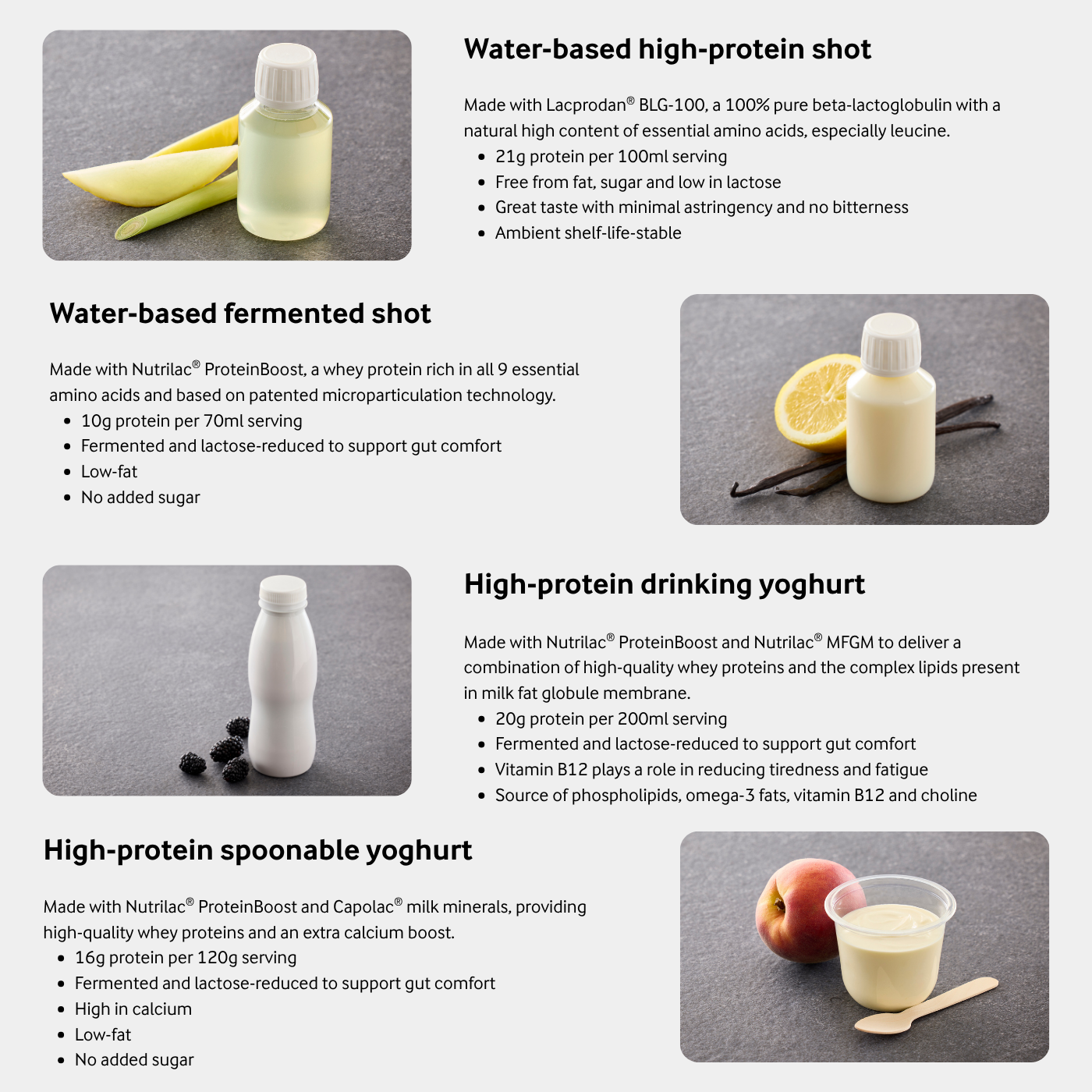
Download our handout and get in touch to learn more.
References:
1. Euromonitor Voice of the Consumer: Health and Nutrition Survey, fielded February 2025, n=3,753
2. The GLP-1 Revolution: Insights for food and beverages – May 2025, Euromonitor International
3. Chaston, T.B., et al. (2007). “Changes in fat-free mass during significant weight loss: a systematic review”. International Journal of Obesity 31: 743
4. Wilding, J. P. H., et al. (2021). "Once-Weekly Semaglutide in Adults with Overweight or Obesity." New England Journal of Medicine 384(11): 989
5. Jastreboff, A. M., et al. (2022). “Tirzepatide Once Weekly for the Treatment of Obesity”. New England Journal of Medicine 387(3): 205
6. Neeland et al. Changes in lean body mass with glucagon-like peptide-1-based therapies and mitigation strategies. Diabetes Obes Metab. 2024;26(Suppl. 4):16–27
7. Wilding J.P.H. (2021). Op. cit.
8. FMCG Gurus, Weight Loss Medication survey, N:16000, 2025
9. The GLP-1 Revolution: Insights for food and beverages – May 2025, Euromonitor International